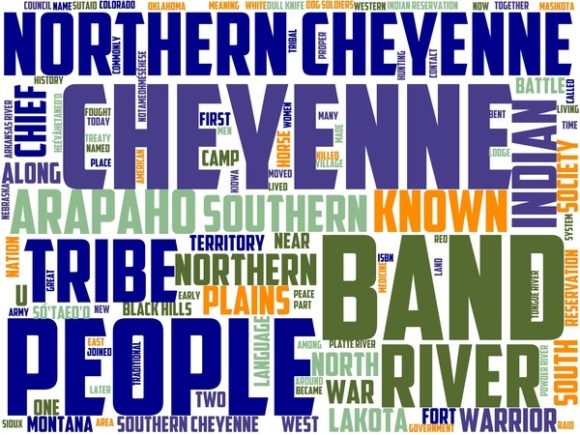
Cheyenne Wordart Sticker
If you’ve ever stared at a blank T-shirt, a plain notebook cover, or a dull event banner wondering how to make it feel personal, uplifting, or unmistakably you—the Cheyenne Wordart Sticker is the quiet creative partner you didn’t know you needed. It’s not just another digital graphic. It’s a hand-drawn, colorful wordcloud built with intention: each word flows into the next like brushstrokes, not code. The colors are warm but grounded—think terracotta, sage, mustard, and dusty rose—not neon overload. And because it’s designed as a sticker file (PNG with transparent background), it drops cleanly onto fabric, paper, ceramic, or screen without fuss.
Where This Wordcloud Actually Fits Into Real Life
People don’t buy wordclouds for the sake of having one. They reach for the Cheyenne Wordart Sticker when they need to communicate feeling—not just information. A teacher printing classroom posters might use it to highlight “curiosity,” “kindness,” and “try again” in a way that feels inviting, not instructional. A small-batch candle maker overlays it on kraft tags to soften branding without losing clarity. A wedding planner drops it into invitation suites where “love,” “laughter,” and “together” nestle organically beside floral illustrations—not stacked like bullet points.
It works because it’s legible at a glance but rewards closer looking. You might spot “joy” first, then pause at “slow down” tucked near the bottom corner. That layered readability makes it effective across scales: tiny on a magnet, bold on a 24x36 poster, subtle on a linen pillowcase.
Real Uses—Not Just Categories
For educators and homeschoolers: Print the Cheyenne Wordart Sticker on cardstock, cut it out, and laminate it as a calm-down visual for elementary students. Or layer it behind student writing prompts (“What makes you proud?”) so the words support reflection instead of directing it. One middle school art teacher uses it as a base for mixed-media collages—students trace over words with embroidery floss or glue on dried flower petals where “growth” or “bloom” sits.
For makers and small businesses: Think beyond flat stickers. A textile designer scans the wordcloud, isolates individual words using clipping paths, and reassembles them into repeat patterns for fabric yardage. A coffee roaster prints it on compostable cup sleeves—“bold,” “grounded,” “awake”—so customers feel the brand tone before tasting the first sip. Even service-based freelancers (like yoga instructors or financial coaches) drop it into Canva-designed social media carousels—not as decoration, but as emotional anchors alongside practical tips.
For everyday creators: That notebook you carry to coffee shops? Add the Cheyenne Wordart Sticker to the inside front cover—not as filler, but as a gentle reminder of your current intention (“listen more,” “pause,” “create freely”). A parent scrapbooking a child’s first year might print it at 30% opacity behind photos of messy hands and scribbled drawings, letting the words echo the joy without competing with the memory.
Why It Works Where Other Wordclouds Fall Short
Most wordcloud generators spit out dense, algorithm-driven shapes—words crammed tight, font sizes dictated by frequency, colors chosen by default palettes. The Cheyenne Wordart Sticker avoids that chaos. Its layout breathes. Negative space matters as much as the ink. That means it holds up in real-world applications: no awkward cropping when resized for a business card, no blurred edges when printed on textured cotton, no clashing contrast when placed over a photo background.
And because it’s hand-drawn—not vector-perfect—it carries warmth. A handmade greeting card with this sticker feels human, not templated. A conference program using it on the schedule page signals approachability, not corporate rigidity.
Before You Download or Apply It—Three Practical Things to Consider
- Match the mood, not just the message. If your project centers on resilience, look at how “steady,” “rise,” and “still” sit in the layout. Do they form a visual anchor—or float loosely? The Cheyenne Wordart Sticker includes multiple versions (some centered, some flowing left-to-right), so choose the arrangement that supports your intent.
- Test contrast early. Even beautiful colors can disappear on certain backgrounds. Try placing it over your intended surface—be it navy denim, off-white ceramic, or a muted Instagram story gradient—before committing to full-scale production. A quick brightness/contrast tweak in Photoshop or even Canva often does the trick.
- Respect scale—and your audience’s eyes. On a tote bag? Great at 8–10 inches wide. On a fridge magnet? Keep it under 2.5 inches. And if kids or older adults will interact with it (e.g., classroom posters or senior center flyers), avoid placing key words in tight clusters or low-contrast zones like pale yellow on cream.
More Than Decoration—A Quiet Tool for Intentional Making
The Cheyenne Wordart Sticker doesn’t shout. It invites. It doesn’t replace your voice—it gives it texture. That’s why it shows up in places you might not expect: stitched onto the inside hem of a custom apron (“measure twice,” “taste always”), laser-etched onto wooden bookmarks (“wander,” “return,” “remember”), or embedded in the footer of an e-book about mindful leadership.
Its flexibility isn’t accidental. It was drawn with physical and digital use in mind—from heat-transfer vinyl cutting machines to Procreate layers to PDF embroidery guides. So whether you’re prepping for a craft fair, launching a new course, designing your kid’s birthday party, or refreshing your studio wall, it adapts without asking you to become a design expert first.
You don’t need to overthink it. Start small: print one copy, stick it on your laptop lid, and notice how often it catches your eye—not as decoration, but as a quiet nudge toward what matters right now.