Arthropathology Wordart Tshirt: A Strategic Design Asset for Purpose-Driven Creators
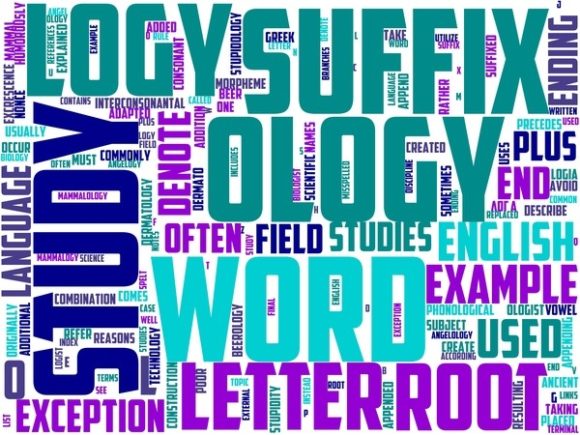
At first glance, the Arthropathology Wordart Tshirt appears as a vibrant, hand-drawn wordcloud — colorful, organic, and rich in visual texture. But its value extends far beyond aesthetics. For entrepreneurs, educators, designers, and small business owners, this isn’t just decorative typography; it’s a versatile, scalable design element rooted in thematic cohesion and intentional communication. “Arthropathology” — the study of diseases affecting arthropods — anchors the piece in scientific curiosity, precision, and natural systems thinking. That specificity matters. It signals depth, invites interpretation, and resonates with audiences who value authenticity over generic visuals.
Why Contextual Precision Matters More Than Visual Appeal Alone
A wordcloud only delivers strategic value when its vocabulary, tone, and structure align with your goals. The Arthropathology Wordart Tshirt stands out because its lexicon is curated — not random. Terms like *exoskeleton*, *molting*, *chitin*, *arthropod*, *vector*, and *cuticle* aren’t filler; they’re conceptual anchors. When applied to apparel or promotional materials, they subtly reinforce expertise, niche authority, or interdisciplinary thinking. A biology educator printing this on lab-coat pockets signals rigor. A science communicator using it on workshop banners primes attendees for thoughtful engagement. A textile designer adapting its linework for eco-friendly fabric patterns ties biological structure to sustainable practice.
This kind of alignment doesn’t happen by accident. It requires asking: What outcome do I want this design to support? Brand recognition? Audience resonance? Educational scaffolding? Community identity? Without clarity here, even the most beautiful Arthropathology Wordart Tshirt becomes visual noise — memorable only for its color, not its meaning.
Practical Use Cases That Deliver Real Outcomes
The versatility of the Arthropathology Wordart Tshirt lies in how easily it transitions across formats — but effectiveness depends on intentionality, not convenience. Consider these grounded applications:
- Classroom & Curriculum Tools: Print the wordcloud on durable posters or student notebooks to reinforce terminology without rote memorization. Its spatial layout supports visual learning — students recall where “hemolymph” sits relative to “tracheae,” deepening associative memory.
- Small-Business Branding: A pest management consultancy might adapt the design into a subtle watermark on service proposals or vehicle decals. The scientific framing builds credibility without jargon overload — positioning them as knowledgeable, not clinical.
- Craft & Maker Markets: When screen-printed onto organic cotton tees or embroidered onto tote bags, the Arthropathology Wordart Tshirt appeals to science-minded consumers who prioritize both ethics and intellect. It performs double duty: product + conversation starter.
- Digital Content & Publishing: Ebook covers, chapter dividers, or newsletter headers benefit from its hand-drawn warmth. Unlike sterile vector icons, its imperfections signal human authorship — critical for building trust in educational or independent publishing contexts.
Notice what’s consistent across these examples: the design serves a functional role first, aesthetic second. It’s never deployed just because it’s available.
When Not to Use the Arthropathology Wordart Tshirt — And Why
Strategic restraint is as important as creative application. Avoid using the Arthropathology Wordart Tshirt when:
- Your audience has no frame of reference for entomology, pathology, or comparative anatomy — and you’re not prepared to provide context. Without grounding, the imagery may confuse rather than clarify.
- You’re targeting broad consumer markets (e.g., general retail apparel) without a clear narrative hook. Its strength lies in specificity; diluting that with mass-market assumptions weakens impact.
- You’re using it purely decoratively — on mugs, magnets, or stickers — without linking it to a larger message, mission, or learning objective. In those cases, simpler, more universally legible motifs often communicate faster and more reliably.
Risk isn’t in the design itself — it’s in uncoupling form from function. A beautiful wordcloud on a conference badge means little if attendees don’t understand why those words matter to the event’s purpose.
How to Integrate It Thoughtfully — A Planning Framework
Before applying the Arthropathology Wordart Tshirt, run through this brief decision sequence:
- Define the core objective: Is this about education? Identity? Differentiation? Lead generation? Be specific — “increase engagement” is too vague; “help high school AP Bio students visualize arthropod physiology pathways” is actionable.
- Map the audience journey: Where will they encounter the design? What do they need to know *before*, *during*, and *after* seeing it? A poster in a university hallway needs different scaffolding than a sticker on a field researcher’s water bottle.
- Assess scalability and adaptation: Can the hand-drawn detail hold up at thumbnail size on a mobile flyer? Does the color palette meet accessibility contrast standards? Test early — don’t assume resolution or legibility transfers seamlessly across mediums.
- Plan for continuity: If used across multiple touchpoints (website banner → workshop handout → Instagram story), ensure supporting copy reinforces the same concepts. Repetition without reinforcement creates dissonance.
This isn’t bureaucracy — it’s stewardship of attention. Every viewer gives you seconds of cognitive bandwidth. The Arthropathology Wordart Tshirt earns more of that time when it’s part of a coherent system, not an isolated flourish.
Long-Term Value: Beyond the First Print Run
Design assets gain compound value when reused intelligently over time. The Arthropathology Wordart Tshirt supports longevity because its foundation is conceptual, not trend-dependent. While fashion motifs fade, scientific frameworks endure. Today’s classroom poster can become tomorrow’s professional development workbook graphic. This year’s conference banner can evolve into next year’s podcast episode art — with minor color or layout tweaks, not full redesigns.
That durability also supports operational efficiency. Small teams and solopreneurs benefit from modular assets: one source file adapted across twelve use cases saves hours per project. But efficiency shouldn’t compromise meaning. Reuse works only when each iteration still answers the question: What does this help the viewer understand, remember, or do?
Consider documenting your usage decisions — not just where you placed the Arthropathology Wordart Tshirt, but why that placement supported your goal, what feedback you observed, and whether adjustments improved outcomes. That reflection turns a single design into a living asset — one that grows smarter with every application.
Final Thought: Design as Deliberate Communication
The Arthropathology Wordart Tshirt exemplifies how specialized, hand-crafted visuals can serve serious purposes — if treated as tools, not ornaments. Its power emerges not from how many places it can appear, but from how precisely it appears where it matters most. Whether you're launching a science outreach initiative, designing curriculum for underserved schools, or building a brand around ecological literacy, this wordcloud offers more than decoration. It offers coherence. It offers credibility. It offers a quiet, confident way to say: We pay attention to detail. We honor complexity. We choose meaning over momentum.
That’s not just good design. It’s good strategy — executed one thoughtful application at a time.