Alethiology Wordart Tshirt: A Hand-Drawn Word Cloud for Creative Projects
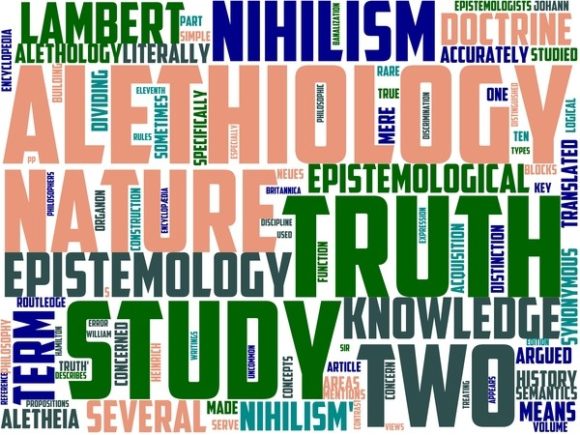
The Alethiology Wordart Tshirt refers to a digitally delivered, hand-drawn word cloud design centered around the concept of “alethiology”—the philosophical study of truth. Unlike generic typography or clipart, this artwork features organic linework, vibrant yet balanced color palettes, and intentional spatial composition. It is not a physical garment but a versatile vector or high-resolution raster file intended for use across apparel and print-on-demand applications, as well as broader creative contexts like home décor, stationery, and branding.
People exploring this design typically fall into two overlapping groups: crafters and small-business creators. Crafters—including hobbyists, educators, and DIY enthusiasts—often seek original, meaningful visuals that convey depth without relying on overused motivational phrases. Small-business owners—especially those in wellness, education, philosophy-themed retail, or mindful lifestyle brands—look for distinctive assets that support cohesive visual identity while resonating with thoughtful audiences.
One reason someone might consider the Alethiology Wordart Tshirt is its thematic specificity. The inclusion of words like “veracity,” “evidence,” “clarity,” “integrity,” and “inquiry” reflects a nuanced, non-dogmatic approach to truth—a contrast to slogans emphasizing certainty or authority. This makes it especially relevant for contexts where intellectual humility, critical thinking, or academic curiosity are central values.
Its hand-drawn aesthetic offers a human touch that scales well across mediums. Because it’s designed with clear spacing and legible letterforms—even at smaller sizes—it performs reliably on fabric (e.g., t-shirts, tote bags), paper (e.g., notebooks, greeting cards), and rigid surfaces (e.g., mugs, magnets). The color palette is intentionally varied but harmonized, supporting both full-color printing and selective spot-color applications.
However, practical considerations affect suitability. First, the design assumes some familiarity with the term *alethiology*. While it may intrigue viewers who recognize the word—or prompt curiosity—it does not function as immediately accessible as more common themes like “gratitude” or “mindfulness.” That can be an advantage for niche audiences but a limitation when broad appeal is required.
Second, because it’s a single, fixed composition—not a customizable template—the user must evaluate whether the specific arrangement, font choices, and included vocabulary align with their intended message. There is no built-in option to swap out words or adjust hierarchy without editing the file directly (e.g., in Adobe Illustrator or Affinity Designer). Users without vector-editing experience may find adaptation time-consuming.
Third, licensing terms matter. Most versions of the Alethiology Wordart Tshirt are offered under standard commercial licenses, permitting use in physical products and digital marketing—but not resale of the design itself as standalone art or inclusion in design asset subscriptions. Always verify license scope before scaling production or integrating into client work.
This design works best when used intentionally rather than decoratively. For example, it fits strongly in academic settings—such as philosophy department merchandise, conference swag, or student-led discussion group materials—where the theme reinforces purpose. It also suits independent publishers producing journals or zines about epistemology, media literacy, or science communication. In textile design, it pairs effectively with natural fibers and minimalist cuts, letting the artwork carry conceptual weight without visual competition.
Similarly, educators developing classroom resources on logical reasoning or argument analysis may use the word cloud as a visual anchor in handouts or bulletin boards. Its layered vocabulary supports scaffolding discussions: students can identify familiar terms, define unfamiliar ones, or debate relationships between concepts like “bias” and “objectivity.”
Conversely, alternatives may be preferable in several situations. If your goal is mass-market apparel with wide demographic reach, a more universally recognizable phrase—like “Think Deeply” or “Question Everything”—may yield stronger initial engagement. Likewise, if you need flexibility to localize content (e.g., translating key terms into Spanish or Mandarin), a custom-designed word cloud built from scratch would offer greater control than adapting an existing layout.
For branding projects requiring strict logo compliance—such as corporate identity systems where color, proportion, and typography must adhere to precise guidelines—the Alethiology Wordart Tshirt may need significant modification. Its illustrative nature and multi-word structure make it less suitable as a primary logo and better suited as a secondary pattern, background motif, or campaign-specific graphic.
Another consideration is production method. While the design translates well to screen printing and direct-to-garment (DTG) printing, its color complexity may increase cost or limit vendor options in low-budget, high-volume runs. Simplified monochrome versions—either provided by the creator or self-generated—can mitigate this, but require extra prep time.
When evaluating whether the Alethiology Wordart Tshirt aligns with your goals, ask three questions:
- Does the theme serve a functional role in your project? For instance, does “truth-seeking” meaningfully connect to your audience’s values or your product’s purpose—or is it primarily decorative?
- Do you have access to tools or collaborators who can adapt the file if needed? Vector editing capability expands reuse potential; absence of it narrows application to out-of-the-box uses.
- Is your distribution channel compatible with the design’s strengths? It thrives in contexts where viewers spend time engaging with detail—like a poster in a university hallway or a notebook cover—rather than fleeting impressions, such as social media banners or billboard ads.
In summary, the Alethiology Wordart Tshirt is not a one-size-fits-all solution, nor is it meant to be. Its value lies in precision: offering a thoughtfully constructed visual tool for people who prioritize conceptual resonance over trend-driven aesthetics. It rewards careful selection and intentional placement. When matched to the right context—whether a philosophy professor designing course materials or a small press launching a book on scientific integrity—it functions not just as decoration, but as quiet reinforcement of shared values.
If your aim is to communicate depth, invite reflection, and avoid cliché, this word cloud warrants close evaluation. If, however, your priority is rapid deployment, maximum scalability, or universal instant recognition, exploring broader or more adaptable word art alternatives may better serve your objectives.