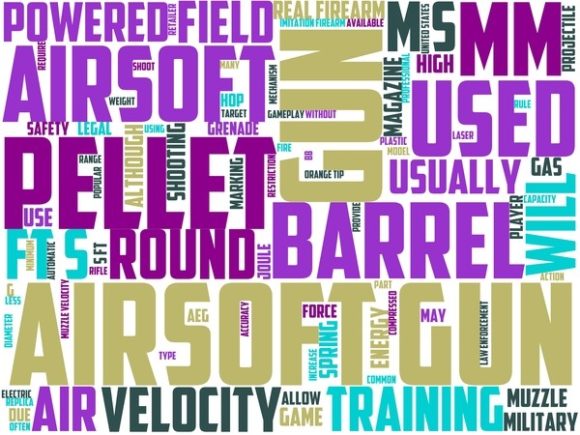
Airsoft Wordart Banner
An Airsoft Wordart Banner refers to a hand-drawn, colorful word cloud design centered around themes common in airsoft culture—such as teamwork, precision, strategy, resilience, and fair play. Unlike standard digital word clouds generated by algorithms, this variant emphasizes artistic craftsmanship: each word is thoughtfully placed, stylized with varied fonts, weights, and illustrative flourishes, and arranged to form a balanced, visually cohesive composition. It is delivered as a high-resolution, scalable vector or raster file intended for versatile physical and digital application.
This type of word art is not a software tool or a live-editable web generator. Rather, it is a ready-to-use graphic asset—designed once, optimized for reproduction, and licensed for commercial or personal use depending on the terms provided by the creator or vendor. Its primary value lies in its aesthetic integration: it bridges thematic messaging with visual appeal across tangible and printed media.
Why Consider an Airsoft Wordart Banner?
Individuals and small teams involved in airsoft—whether organizing events, managing clubs, designing merchandise, or producing educational materials—often seek design elements that communicate identity and ethos without relying on clichéd imagery (e.g., generic weapon silhouettes or aggressive typography). An Airsoft Wordart Banner offers a subtler, more inclusive alternative: one that highlights values over hardware, community over competition, and intention over intensity.
It appeals especially to those prioritizing brand consistency across multiple touchpoints—such as event banners, participant notebooks, promotional flyers, or apparel—and who want a unifying visual motif that feels intentional and human-made, rather than algorithmically assembled.
Practical Benefits and Realistic Expectations
The main advantages of using an Airsoft Wordart Banner include:
- Design efficiency: Reduces time spent sourcing, editing, or commissioning custom illustrations for recurring themes.
- Visual cohesion: Provides a consistent typographic and color language across diverse formats—from fabric-printed t-shirts to die-cut stickers or magazine spreads.
- Scalability: When supplied in vector format (e.g., SVG or EPS), it retains clarity at any size—ideal for large-format posters or small embroidery applications.
- Licensing flexibility: Many versions permit both personal and commercial use, including resale on physical goods like mugs, tote bags, or patches—provided attribution or license terms are followed.
However, expectations should be grounded. This is not a customizable template in the sense of drag-and-drop editors. Editing individual words, rearranging layout, or adjusting colors typically requires intermediate proficiency with design software such as Adobe Illustrator or Affinity Designer. Users expecting plug-and-play adaptability—like changing text on a Canva banner—may find the learning curve steeper than anticipated.
When an Airsoft Wordart Banner Is a Strong Fit
An Airsoft Wordart Banner works well in contexts where:
- You’re developing branded collateral for an airsoft club, training program, or youth initiative focused on sportsmanship and skill development.
- You need repeatable, theme-aligned artwork for print-on-demand products (e.g., notebooks, enamel pins, or wall art) without investing in full custom illustration per item.
- Your audience responds positively to warm, approachable, and non-intimidating visuals—particularly in outreach to schools, families, or newcomers unfamiliar with tactical aesthetics.
- You value hand-crafted authenticity over photorealism or hyper-modern minimalism and wish to reflect that sensibility consistently across your communications.
In these cases, the banner serves less as a standalone graphic and more as a modular design component—one that reinforces tone and topic while reducing visual fragmentation across platforms.
When Alternatives May Be More Suitable
There are scenarios where an Airsoft Wordart Banner may not align with practical needs:
- You require frequent, real-time text updates. If your use case involves regularly rotating slogans, event dates, or participant names (e.g., dynamic name tags or rotating social media posts), a static word cloud lacks the responsiveness of editable templates or generative tools.
- You need strict adherence to brand guidelines. While many banners offer adaptable color palettes, built-in constraints—such as fixed font pairings or embedded textures—may conflict with existing brand systems requiring precise hex codes or Pantone matches.
- You’re designing for accessibility-first contexts. Hand-drawn letterforms and overlapping text can reduce legibility for some users. For official documentation, safety signage, or public-facing materials where clarity is legally or functionally critical, simpler, high-contrast typographic treatments may be preferable.
- You’re working under tight budget or timeline constraints and lack design support. Integrating the banner effectively still requires layout knowledge—especially when combining it with photography, icons, or multi-language text. Without access to basic design assistance, results may appear inconsistent or underutilized.
Making a Practical Decision
To determine whether an Airsoft Wordart Banner fits your goals, ask yourself three questions:
- What is the primary function of the design? If it’s decorative reinforcement of core values across merch and print media—and you already have a defined color palette or typography system—the banner likely adds coherence. If it must serve functional roles like instruction, identification, or data display, evaluate legibility and hierarchy first.
- Who handles your design work? If you or your team routinely edit vector files and understand layer organization, licensing, and output specifications (e.g., bleed, DPI, CMYK vs. RGB), implementation will be straightforward. Otherwise, consider whether the time investment in learning or outsourcing offsets the initial cost savings.
- How long do you intend to use this asset? Because it’s manually crafted—not algorithmically generated—it tends to age well visually. A well-designed banner remains relevant across seasons and organizational changes, making it a sound choice for longer-term branding efforts versus short-term campaigns.
Finally, review file details carefully before acquisition: confirm format (vector vs. high-res PNG), dimensions, color mode, included licenses, and permitted use cases. Some vendors distinguish between “personal use only” and “small business commercial use”—and mixing these without clarification could lead to compliance issues down the line.
In summary, an Airsoft Wordart Banner is a purpose-built visual tool—not a universal solution. Its strength lies in thoughtful repetition, thematic resonance, and artisanal execution. Evaluating it alongside your specific production capacity, audience expectations, and long-term communication goals helps ensure it functions as intended: not just as decoration, but as a consistent, meaningful part of how your message is seen and understood.